

Strategic Planning Themes: A Look Back at the Past Few Years
With the end of the year approaching, I’ve been thinking about strategic planning themes — What are they? How could I identify them? How might they evolve year-to-year? Understanding themes and trends offers numerous benefits to you as a leader since they can help inform decisions and strategies.
Here’s what I discovered about strategic planning themes in reviewing plans from customers over the last 3 years.
This article was initially posted on Nonprofit Pro.
Spotify, the digital music service, has me looking forward to the end of the year. That's because it released Spotify Wrapped, a year-in-review that provides all kinds of interesting data points about its listeners as a whole and my listening habits as an individual. I find it fascinating to learn about how many minutes of music we listened to, as well as how many plays our favorite artists and songs had during the year.
This got me thinking about strategic planning themes — What are they? How could I identify them? How might they evolve year-to-year? Understanding themes and trends offers numerous benefits to you as a leader since they can help inform decisions and strategies.
I parsed through more than 10,000 rows of strategic plan elements (core components, such as mission, vision and values), focus areas and goals from more than 375 nonprofits across the last three years. I noted the most commonly used words (including synonyms) by finding keywords and reviewing their context and sequences. Here are the four common themes of strategic planning over the past few years that I identified.
1. A Focus on People
Nonprofits rightfully have a reputation of caring about living things. From people development to a focus on customers and stakeholders, that reputation is represented in strategic plans as many organizations focus on people through team development or stakeholders.
Professional Development
Nonprofits are dedicated to professional development both internally and externally. On many plans, organizations noted the need to find and offer professional development opportunities to their staff. Many are looking for conferences, seminars and other types of training to allow staff to strengthen their current skills or explore new areas of interest. Other nonprofits offer professional development opportunities as part of their programming to their constituents.
Vision statement examples include:
Establish strong professional development programs for staff and board, improve internal operations systems, and provide sufficient wages and support for staff.
Enable the team to meet professional development goals and create programs that they feel most passionate about and equipped for.
Goal statement examples include:
Team members to identify two personal and professional development goals every year.
Establish an annual professional development conference of directors in our network.
Board Development
Board development is another area of focus on many strategic plans. Nonprofits are focused on this group of people to ensure they have the skills, values and commitment to effectively execute their missions. Many plans mention the need to create board committees. Others are looking to expand their boards to find professionals with skills in the areas the organizations need.
Vision statement examples include:
Build an engaged, supportive and capable board.
Establish effective and efficient policies and procedures for the board of directors to fulfill the purpose of the organization, ensuring fulfillment to the organization's fullest potential.
Goal statement examples include:
Complete board recruiting plan policy, including board selection criteria, plan for vetting members and creation of board orientation packet.
Increase board membership to 12 with diversity of skills and demographics.
Programming
Perhaps the most focus on strategic plans is about programming and communication for customers and stakeholders. Nonprofits are focused on refining programs to meet the needs of their community. They are also looking to expand the ways they reach and communicate with their stakeholders and customers.
Vision statement examples include:
Deliver distance learning and virtual training and advising with a personal touch. (Create programming with deep consideration to how the instruction is led.)
Develop community-centric programming.
Create, communicate, and deliver information regarding programs throughout the county.
Goal statement examples include:
Develop a marketing campaign to grow the program attendees to 20 in each offering.
Develop a financial plan that supports program expansion by the end of fall.
Develop program evaluation process.
2. Diversity, Equity, and Inclusion
Diversity, equity and inclusion are top priorities among the nonprofits, and I know that there is still a lot of work to be done. A nonprofit’s strategic plan is a great place to document the work that you are dedicating to doing to advance these important values so that we can truly make sustainable changes and embody them.
Diversity themes in the review of strategic plans focus on bringing together a team of diverse individuals with different identities, qualities and backgrounds. Equity themes have many nonprofits reviewing all of their organizations’ policies, procedures and processes to determine how to help all people achieve the same level of success.
Strategic plans are also noting the importance of diverse groups having their voices heard in important aspects of the nonprofit. Some nonprofits have set a goal of creating committees of community members to hear their stories and plan to share that information across their marketing channels.
Other focuses of diversity, equity and inclusion in strategic plans include nonprofits creating initiatives, task forces and committees as a way of acknowledging the importance of DEI work and their dedication to creating institutional change.
Vision statement examples include:
Increase the inclusivity and diversity of our events.
Define and set a diversity goal for the board.
We will identify, build and embrace the core values of diversity, equity, and inclusion into all of our nonprofit’s operations, as well as model those values as we advance our mission.
Goal statements examples include:
Review all policies, procedures, and processes to ensure compliance with our board-approved DEI statement.
Create a community voice group to regularly gather community stories for sharing across our social and other marketing channels.
Create and implement a DEI action plan, including an official statement and policy on DEI efforts within the organization.
3. Measurement and Analysis
The benefits of leveraging data are numerous so I’m thrilled that “measurement” and “analysis” were two words repeatedly used across focus areas and goals in my review of strategic plans. Measurements and data analysis can provide leaders with the information they need to make informed decisions about their nonprofits. Additional benefits include increased productivity and greater financial stability by discovering and cutting unnecessary costs.
A couple of the most common areas for measurement were fundraising, programming and performance.
Vision statement examples include:
Implement a performance management system for driving and managing daily operations and for tracking overall organizational performance (that align with strategic direction.)
Fundraising efforts will be more goal-oriented, such as identifying specific amounts to raise for scholarships, using donor database effectively and personally engaging with donors using list of needs, stats, impact statement and testimonials,
Establish a small set of metrics to measure our impact.
Goal statement examples include:
Address feedback from program participants to increase satisfaction ratings measurement of program leaders to eight out of 10.
Document and reinforce values to increase positive ratings in culture survey results from our team.
Focus on deepening relationships with donors to increase our direct donor fundraising by 15% in the next year.
4. Strategic Planning
Another interesting point to note is that many organizations have chosen to include strategic planning on their plan in some fashion. It’s a great way to emphasize the continued focus that nonprofits should have on the strategic planning process.
Nonprofits are using their strategic plans to set goals for their processes of creating and implementing their plans. Many note the ongoing cycle of strategic planning and include the need to create their next three- or five-year plans.
Other nonprofits are branching out and creating different strategic plans for other aspects of their organizations. For example, one nonprofit is expanding with regional centers, so it created a strategic plan for its “home base” as well as regional centers since they will have different goals.
Vision statement examples include:
We will have institutionalized a process of regularly reviewing, revising and updating our plan in pursuit of our mission and vision.
Installed a strategic planning process that is a part of our culture. It will be part of how we run the organization.
Goal statement examples include:
Develop a strategy committee that is responsible for advising in the development and implementation of strategies consistent with our mission and strategic plan.
Establish an annual strategic planning cycle, to include quarterly reviews. Send meeting invitations to team members for the year.
Plan semi-annual strategic planning and development meetings with the entire staff and board.
Key Takeaway and Next Step
Some of these themes are consistent year to year. I regularly see topics, such as fund development, communication and marketing, and programs, included on strategic plans. This isn’t surprising because they are at the heart of most nonprofits. However, the actions and tactics for each topic may change and evolve over time.
The use of social media, for example, is increasingly being represented on strategic plans as part of a nonprofit’s broader communication and outreach plans. What went from “use social media” is now a more sophisticated and detailed action plan such as analyzing engagement on social media platforms, creating a posting calendar and using social media to increase outreach efforts to constituents for a specific event or program.
It’s important to both know the information and to use it. I encourage you to review these themes and compare and contrast it with your own nonprofit’s strategic plan. If this information is represented in your strategic plan, how should it evolve over time? If not, should it be? I can’t wait to see what you do next and the themes that emerge next year.

Setting Measurable Goals Is Critical to Your Strategic Plan (and Your Success). Here's Why.
If you want your nonprofit to meet its goals, achieve greater organizational capacity, hit its mission, generate more revenue and be more financially secure, here's what you need to do.
This article originally appeared on entreprenuer.com
As an entrepreneur or business leader, there are myriad reasons why you should care about goals: They help lead you in the right direction for your vision; they motivate teams and hold them accountable; they help leaders make decisions, clarify priorities and eliminate day-to-day distractions.
But most importantly, the measurement of goals will help you track progress and explain the direction of your business to funders and other opportunities for financial capital — and the best way to do this is to include goals in your strategic plan.
A strategic plan captures and communicates your goals to various audiences. The strategic planning process includes a document that summarizes your vision for the future of your organization and lists the goals and objectives to reach that vision. The result of this process is not only meeting the goals you were seeking, but also achieving greater organizational capacity, hitting your mission, generating greater revenue and being more financially secure. Here's how to do it right.
A common challenge with goals
You've likely been hearing about goals since you were a kid. They've been taught and promoted to you by your teachers, counselors, coaches, bosses and so on.
As a result of all of the different inputs, you have likely learned different definitions of goals. In fact, I bet that if you ask members of your team to define a goal, then you'd get a variety of different answers — and that's a major problem.
One of the challenges that I frequently encounter as an obstacle to successful strategic planning is the varying definitions of goals that team members have. When your team members define goals differently, they approach goals and performance with different perspectives and ends in mind.
So let's get everyone on your team on the same page with a common definition of a goal.
I take my goal-defining guidance from the world of sports. In soccer, for example, a goal happens when the ball crosses over the goal line. In hockey, a goal is scored when the puck crosses the line. There are numerous other sports examples, but all of them provide crystal clarity for when a goal is scored.
Applying this concept brings me to the following simple definition of a goal: a specific and measurable desired achievement.
How to write strong goals
You may be familiar with the well-known SMART mnemonic acronym for writing goals:
S: Specific
M: Measurable
A: Accountable
R: Relevant
T: Time-bound
Over the years, I've found the SMART acronym to be quite useful. My definition above highlights the specific and measurable elements of the SMART acronym.
Most of the time, the "A" in the acronym refers to either "achievable" or "attainable." While that works, I think "accountable" (or even "assignable") is stronger. All too often, I see teams create goals that don't have people identified as being accountable to them. And, not surprisingly, the goals don't get completed.
Regarding the "R," as in "relevant," your goal should be taking you in the direction of a long-term vision.
One other thing: I like to add a "goal topic" to the beginning of goals on a strategic plan since it helps readers get a quick idea of what the goal is about. For example, when setting a goal of receiving a specific score on a staff survey, I'd use the goal topic of "staff engagement."
When developing your goals for your strategic plan, ask yourself the following questions:
Is it specific?
Is it measurable?
Does it have accountability?
Is it relevant?
Is it time-bound?
You'll know you've got the right goals for your plan when the answer to each of those questions is "yes."
Goal guidance for your strategic plan
There are two different types of goals that you can develop for your strategic plan: results goals and process goals. Results goals are accomplished when a specific metric has been achieved. Process goals lead to the completion of a plan, process or system.
That said, you may be wondering about how you can measure process goals. Those goals are complete when you have a documented process in place. Sure, it's not a number, but it's still a measurable achievement.
This leads me to a very important piece of guidance. Several years ago, I started to notice that organizations I worked with that were really succeeding in strategic planning utilized a high percentage of process goals. In other words, they created and achieved goals that helped them develop capacity-building processes. So, be sure to consider including process goals in your strategic plan if you want to create the changes you're seeking.
I recommend having goals on your strategic plan that are organization-wide that have a completion timeline of several weeks to one year. You can also list action items, the individual tasks of the larger goals, that will take a shorter amount of time to complete.
In summary, it's critical that you and your team have a common approach to how you write strategic goals. This guidance will help your organization solidify its strategic plan and achieve greater success.

5 Tips to Turn Data Management into Meaningful Action
How can nonprofits turn data management into meaningful action? We have five tips for moving forward:
“Data is like garbage. You’d better know what you are going to do with it before you collect it.”
~ Mark Twain
Nonprofits in Mark Twain’s day had nowhere near the amount of data available to them that organizations do today, yet Twain’s thought is still relevant today. With so much information available, it’s relatively easy to collect a ton of data and have it pile up rather than use it to contribute to meaningful action.
Data science has advanced greatly, allowing nonprofits to harness it for good. However, using data to its fullest potential remains a challenge. Many nonprofits miss opportunities among their data and, instead, merely “collect” it.
If you’re ready to transform data management into meaningful action, the below tips are for you.
1. Personalize Your Interactions
Relationships are a core part of the success of any nonprofit. You need to build strong relationships with donors, stakeholders, and the community to attract the assistance and funding you need to meet your mission.
One thing data can help you to do better is personalize your interactions. You have access to a whole host of information about your donors and key stakeholders; you can use it for more impactful messaging.
For example, you might personalize messages based on the actions of donors, initiatives they have participated in, or even major events in their lives. Donor intelligence software can provide information such as real estate sales, inheritances, and affinity with a particular cause. You can find information on people’s interests and participation in various causes or activities. Any of this information can be a useful opener to a more personalized approach.
If you can personalize your interactions, they become much more meaningful and powerful messages. People tend to respond better when messages are relevant to them, and they can feel that your nonprofit is trying to get to know them better.

2. Inform Your Strategic Plan
Data can also help inform your strategic plan.
For example, you may want to gather information on how your nonprofit is perceived through assessments or surveys. When you have a good idea of how your organization is perceived, you can use that information to help inform your long-term plans. In this particular example you may find that people have some misconceptions about your organization. A long-term vision should be to turn that perception around, drawing in more donors and volunteers.
Your strategic plan should be supported by your data collection. It should have your goals and action items to help you get there. Some examples of data that can inform your strategic plan include:
Donor profiles.
Information about potential untapped sources of funds.
Information about how you are perceived vs. how you’d like to be perceived.
Marketing campaign data. For example, what has been successful vs. unsuccessful?
Market/economic information and trends.
Data on the impact of your organization’s initiatives.
3. Identify Key Metrics
As a nonprofit leader it’s possible that you’ve been asked, “How do you measure the success of your organization?” That’s where “key metrics” come in.
As we wrote about, an organization’s key metrics are three to five high-level measures that indicate your organization’s overall success. Examples of these metrics are:
Tons of CO2 reduced
Number of senior citizens participating
Reduction in cancer rate
Some of your metrics may be “output” metrics like number of students served or number of legislators engaged. Other metrics may be “outcome” metrics like a percent increase in literacy or number of families that transition out of poverty. Whatever type of metric you use, they should provide an indicator of the overall success of your organization.
The data that you collect across your organization can be used to help you identify what key metrics are the most relevant.
4. Continuously Improve Performance
Data helps nonprofits improve the monitoring and implementation of organizational efforts, helping drive a culture of constantly improving performance. Predictive analytics can help you accurately measure effectiveness so you can tailor future efforts.
For example, educational institutions can look at data on their student’s past performance or coursework, giving them a better idea of who may be in danger of dropping out before graduating.
Food banks can use predictive analytics to determine the need for food and how to find donors who could help meet that need. They can use this to stay on top of the need, so they don’t fall short at crucial times. All sorts of data can come into this equation; the state of the economy, downsizing at local companies, disaster events, and more.
The Nonprofit Council also states: “... it's important also to communicate what you are discovering and use those lessons to continuously improve performance."
"Whether your nonprofit engages in formal 'evaluation,' monitors progress towards specific goals, or uses feedback loops to learn what's working and what's not, each of these activities is a type of 'performance measurement.'"
5. Hone Your Marketing Campaigns
“Data are just summaries of thousands of stories—tell a few of those stories to help make the data meaningful.”
~ Dan Heath, bestselling author
This is a great point to wrap up our tips. Data is essential to determine meaningful action, but never forget the human element or the stories behind that data. In the case of nonprofit marketing, this is how you will create more impactful campaigns.
People connect with the human stories behind your data, for one thing. They want to know your overall results, along with the real tales of how you’ve made an impact.
You can also use data to better target your campaigns toward those most likely to respond to those stories. Data on people’s affinity with your cause and ability to donate will help you target those with a high likelihood of donating. This can be a cost savings for tight marketing budgets, getting better results through approaching fewer people.

Conclusion: Data Is Not Enough
Data is meaningless without taking action based on the knowledge you gain.
From a Mission Met perspective, simply having information is not enough. Without meaningful action, data is irrelevant. What actions will you take so your nonprofit can make the most impact?
A strategic plan is a way to link goals with long-term plans. Use the data you collect to determine where you are and where you want to be. The obstacles you face between those two should be your goals on a strategic plan.

How to Develop an Effective Tagline For Your Nonprofit
Have you created an impactful nonprofit tagline? Here’s what goes into developing an enduring and effective one:
A tagline provides your nonprofit with a quick, efficient way to communicate your mission to the world.
The short phrase can give audiences an immediate idea of who you are and why they should support your mission. Taglines can help create a memorable association with your nonprofit in marketing materials, but many nonprofits haven’t developed one.
One of the challenges of this handy marketing tool is coming up with a compelling tagline. Nike’s “Just do it” or McDonald’s’ “I’m lovin’ it” sound so simple, but in reality, it usually takes a lot of thought to come up with something that will work.
Are you ready to develop a tagline for your nonprofit? This article looks at how to create a line that will be memorable and effective:
What Is a Tagline?
A tagline is a short phrase that captures the essence of your nonprofit. Taglines that become well-known (such as Nike’s) become brand identifiers that work across all communication channels.
Nonprofits, specifically, should look at taglines that communicate their mission to their audience. You need a succinct line that answers the question, “why should I care?”
Taglines often get mixed up with slogans; however, the two are distinct from one another. While a tagline is an overarching phrase to communicate the meaning of your organization, slogans are campaign-specific. A nonprofit running multiple campaigns might have multiple slogans.
Some examples of nonprofit taglines include:
EarthJustice - “Because the Earth Needs a Good Lawyer”
Common Cause - “Holding Power Accountable.”
Oxfam - “The Future is Equal”
American Diabetes Association - “Connected For Life”
There are different types of tagline styles, specifically among nonprofits. Descriptive (where the line succinctly sums up what they do), imperative (where they command the audience to do something), superlative (where the tagline uses language to indicate they are the biggest or best), interrogative (asking a question) or provocative (giving the audience pause for thought).

What Role Does a Tagline Play in Marketing?
In marketing, the goal of a tagline is to present a memorable description to the public of your organization’s purpose. Your aim should be to create a recognizable part of your nonprofit brand.
An effective tagline can:
Set you apart from other, similar nonprofits
Communicate your purpose clearly
Strengthen the “brand identity” of your nonprofit
Importantly for nonprofits, effective taglines can also help you make an emotional connection with your audience. Doing this can help to motivate them in terms of donations or helping you in other ways.
Effective nonprofit taglines are clear, concise, and creative
Tips for Developing an Effective Tagline
What does it take to develop an effective tagline for a nonprofit? Here are a few tips for creating an impactful line:
#1. Take Some Time
Developing an excellent tagline isn’t likely to happen instantly; ensure you have the appropriate time and space to commit to the process. This time will help you develop something that will make a true impact.
One place to start could be to gather taglines that you like. Look at what other nonprofits, or even for-profit organizations, are doing. What stands out? What is it about those taglines that make an impact on you?
#2. Define the Heart of Your Organization
Your organization’s “heart” includes your mission, vision, and values. It details your purpose for being and why people should support you. If you don’t have clarity over those things, it will be difficult for you to communicate about your organization accurately in your tagline.
It can be helpful to list some descriptive words or concepts for your organization that relate to your mission and values. These can help you to start formulating ideas for a tagline.
#3. Write an Explanatory Paragraph
The “brain dump” approach can help you to narrow down to an impactful tagline. You could start by writing a paragraph that explains what your organization does. Write down everything that comes to mind, especially about what you do, why, and how that helps your cause.
#4. Know What Makes an Effective Tagline
Effective taglines tend to have a few key characteristics. Here are some descriptors:
They are succinct and memorable
They engage the reader, for example, by emphasizing how they help you to move your mission forward.
They communicate a benefit to the reader and the cause you support. It’s not about you; it’s about them.
They help to distinguish your organization from others.
They reflect your organization’s goals.
They capture your distinct voice or personality.
They’re catchy and consistent with your overall branding.
They’re long-lasting. Your tagline isn’t capturing a moment in your organization; if you want it remembered, you need something that will make sense long-term.
#5. Narrow Your Paragraph to a Line
You have a descriptive paragraph, some tagline examples, and a few ideas about what makes a tagline effective; now is the time to narrow down what you have into one line. It’s okay if you need to come up with a few examples; most organizations like to be able to vote on a few choices, anyway.
Consider aspects such as:
Injecting an emotional hook. If you can stir an emotion that helps to communicate a benefit, this helps to draw people in.
How to communicate that emotion with clarity and creativity. Nike managed it in three words, but shorter isn’t always better, especially if you end up sounding too vague or generic. It’s okay to have a longer sentence.
Sometimes prompts or examples can help define the style of tagline you’d like. Here are some examples:
Referencing the problem that you solve. “Improving Life, One Breath at a Time.” (American Lung Society).
Answer the question of why you exist. “Because the Earth Needs a Good Lawyer.” (EarthJustice).
Share a vision of your organization. “Finding a Cure Now, So Our Daughters Won’t Have To.” (PA Breast Cancer Coalition).
State a core belief of your organization. “Ending Poverty Begins with Agriculture.” (Heifer Society).
Engaging the reader. “Give Them Your Voice.” (Girl Effect).
Use of alliteration. “The Art of Active Aging.” (EngAge).
Use of rhyme. “Give a Hoot, Don’t Pollute.” (USFS).
Use the rule of three (three descriptive words or concepts). “Big Sky. Big Land. Big History.” (Montana Historical Society).

#6. Test Your Taglines Out
Your taglines must appeal to donors and your team members. You should test them out to see what really resonates. Regular donors who know you well and your employees can help you to narrow down your choices, so your final iteration is the most impactful.
Sometimes you’ll need to go back and have another go, especially if your options fall flat. It’s okay to need time to tweak and polish your tagline until you end up with the culminating result.
Conclusion
Taglines are a useful yet often overlooked tool for a nonprofit’s branding. A tagline can help your organization position itself with clarity and memorability in the minds of your audience.
The most impactful taglines are clear, concise, and creative. They communicate the purpose of your organization and are consistent with how you otherwise talk about yourselves and your mission.
Coming up with a compelling tagline isn’t always easy, but the ideas presented here can help you narrow down to a few options. Test different iterations and tweak them until you achieve the best possible version of your tagline.
If Your Strategic Plan Is Failing, You Might Want to Look in the Mirror
If all you're doing as a leader is putting out fires, then you're not making time for the fire prevention process of strategic planning — and you're losing numerous opportunities to build your organization.
This article originally appeared on entreprenuer.com
If there is anything I've learned from working with nonprofits to small business development centers to government agencies, it's that strategic plans get shelved just as often as they are created. While much of my guidance about overcoming obstacles to the strategic planning process is tailored for nonprofits, strategic planning is critical for any type of business. If you're a leader in any sector, these recommendations and advice can apply to your strategies.
If you're a leader and your strategic plan isn't working, then it may be time to take a look in the mirror. There's a very good chance that the problem is the lack of attention you're putting on the plan and its execution.
I know you're busy. Maybe you're writing a grant that's due tomorrow, replacing your development director that suddenly left, serving the board's latest urgent request, preparing a financial report for tonight's board meeting and so on. I get it.
But if all you're doing is putting out fires, then you're not making time for the fire prevention process of strategic planning — and, in the process, you're losing numerous opportunities to build your organization's capacity.
I've been leading strategic planning work with nonprofits for about 25 years. I know what works and what doesn't, and the number one thing that keeps strategic plans from working is the inadequate attention that leaders put on using their strategic plans.
Sure, Covid-19 may have kicked your plan's butt and implementing it may have been folly. But now that we're beginning to move to the other side of the pandemic, it's time to update your plan and make sure that your leaders are ready to oversee its execution.
If you've got a strategic plan that needs to get kickstarted or updated, here are some foundational ways that you and your team can make sure that it has the impact that you want.
Approach Strategic Planning as a Process, Not an Event
All too often, leaders view strategic planning as an event or a moment in time. You hear this perspective when they talk about creating a plan or conducting an off-site planning retreat, but they don't discuss how the plan is going to get done.
An alternative and much more supportive mindset is to view strategic planning as an ongoing and never-ending process. Assess, plan, execute and repeat, year after year. All the while, you're making sure that you're championing the overall process on behalf of your team and organization.
Approaching strategic planning as a process also sets a great precedent for all of the other replicable processes that should be at the core of your organization: fund development, performance management, board member onboarding, volunteer training, etc.
Get a Co-Champion
The organizations that have the most success with strategic planning typically have two people that oversee the plan's implementation. I call these people planning "co-champions."
Having a co-champion provides you with accountability, a thought-partner, and, frankly, just makes strategic planning more enjoyable. Plus, the organization builds a deeper talent bench by having two people, not one, that are leading the strategic planning charge.
If you don't have a strategic planning co-champion structure, I strongly encourage you to do so.
Create and Communicate a Planning Calendar
If you're like me, if something's not on your calendar, it just ain't gonna happen. So, get your strategic planning meetings on the calendar — for a full year.
The meetings that I've found that work best are:
An annual meeting or retreat for the board and staff to review and update your plan's long-term vision and key strategic themes
Quarterly check-in meetings of your team's key leaders to ensure that the plan is on track and to celebrate success
Have key team members meet monthly to review and discuss progress on goals
All of these meetings can be planned in advance. Once your team members see these meetings and dates on the calendar, then they'll develop faith in the process and will jump on board with you.
Measure, Measure, Measure
You've probably heard the phrase, "What gets measured, gets done," or, "You manage what you measure." There's a ton of truth in those statements.
I've found that developing a monthly measurement cadence is a good fit for most organizations. Measure your active goals and metrics monthly and make sure that your team knows where things stand.
If you need some ideas on how to best measure the goals and metrics on your plan, then consider this two-part approach. First, use a "traffic light" rubric to apply a color status to each of your goals:
Green: The goal is on track and will likely be completed by the due date
Yellow: There are slow-downs with this goal and it may not be completed by the due date
Red: You've got to be kidding! There's no way this goal will be completed by the due date
I also apply two more colors to round out the rubric:
Blue: The goal has been completed
Grey: Work on the goal hasn't been started
Second, you can make your measurement even more accurate by applying a percent complete score. For example, you may have a goal that is "red" but it's 90% of the way complete. The percent complete score paints a more complete picture.
In conclusion, effective strategic planning — like so many things — requires strong leadership and management. As a leader, it's up to you to make sure that you and your team have the right mindset and practices to ensure that you get the best return on your planning investment.

How to Build a Successful Nonprofit Culture
What does it take to build a strong nonprofit culture, and why is it important? Take a look at our tips here.
Culture is the foundation of any organization, including your nonprofit.
Have you built a deliberate culture? Or has culture developed organically?
Every organization has a culture, deliberately cultivated or not, but that isn’t always a good thing. Sometimes aspects creep in that you don’t otherwise want as part of your organization, which is why intentionally building a successful culture is essential.
Most nonprofits aim to inspire, contribute, and, perhaps most importantly, meet the objectives of their mission. Here’s why and how you can build a culture of success:
Why Culture is Important for Nonprofits
Peter Drucker, one of the most prominent management consultants of the twentieth century, famously said, “culture eats strategy for breakfast.” This quote is concise in saying that you can have the world’s best strategy in place, but it does you no good if you don’t have the thriving culture to support it.
Here at Mission Met, we firmly believe that culture goes hand-in-hand with strategy and that working to improve culture should land in your strategic plan.
Organizational culture determines “how we do things around here.” It also shapes your people’s expectations, attitudes, and feelings toward your nonprofit. Culture influences all aspects of what goes on in your nonprofit. From punctuality to discussion and how your team interacts with donors and stakeholders, everything is colored by the culture. You’ve probably experienced companies with a poor organizational culture before. You can feel it when you walk into a workplace, and people are disengaged or generally disinterested in providing good service.
Paying attention to culture in your nonprofit is important because culture will develop, even if you don’t mold it consciously. It’s definitely preferable that it develops with intention! Poor cultures can lead to high turnover, poor client/donor experience, or lack of engagement. Your goal should be a workplace where people want to be and a motivated team to work toward your goals.

Culture impacts nonprofit strategy and should be part of your strategic plan
Defining Your Nonprofit Culture
Creating a definition of your nonprofit culture is an important place to start. Whether starting from scratch or working to improve your current culture, you need to know where you’re coming from and where you’re aiming.
Your mission and values are an excellent place to start. Importantly, you need the buy-in of your whole team on your values, including what those look like in practice. Some organizations will espouse values but don’t seem to live them. There’s often a disconnect between what the value indicates people should do and what they actually do in practice.
Core values should align with your mission and guide workplace expectations. For example, do you consider work-life balance and team member mental health alongside values that directly relate to your impact? A value such as “wellbeing” can be part of both your internal culture and how you work with people in the community.
You may find that it’s a helpful exercise to define each of your values, then a set of statements to go with each that elaborates on “how we do things around here.” For example, “we listen” might include statements like “all team members have a valued voice and can share ideas, without fear of judgment.” “Wellbeing” might consist of statements such as “we encourage all team members to take breaks when needed and balance work with non-work commitments.”
Another thing to consider is that if you want employee buy-in and for your nonprofit to be a desirable workplace, involve employees in this process. This way, they feel that they genuinely do get to contribute and that your organization gives more than just lip service to listening to team members.
Employee feedback can also be invaluable for assessing the current state of the culture, especially if you’re looking for any areas that need improvement. You might ask for feedback directly, or sometimes employees are more comfortable with an anonymous survey. Encourage frank feedback so that you learn “here is what really goes on around here.”
What Contributes to a Strong, Successful Culture?
While you ponder your own culture, some other well-documented attributes are worth considering.
Employees have meaningful work. Usually, nonprofits have this in spades, but be aware that too much “filler” work or work that doesn’t take advantage of the employee's strengths can be less-than-meaningful.
Leadership is unified and supportive.
Employee wellbeing is genuinely valued.
Teams feel a strong sense of connection.
Recognition occurs frequently, and you celebrate achievements.
The Role of Leadership in Culture
What is the role of nonprofit leadership in shaping organizational culture? Leadership culture contributes to overall organizational culture. Leaders help to shape and drive the desired culture, but the culture among the leaders must be consistent with what aligns with the entire organization's culture.
It’s about leading from the front. If your organization says that it values work/life balance, then your leaders need to demonstrate how they schedule and allocate work, determine leave requests, and react to such requests. Additionally, they need to live it themselves. If leaders work themselves to burnout, that behavior creeps into organizational culture. The story within the team becomes that moving ahead in the organization requires excessive hustling.
Leaders influence culture with every interaction and task. How they hire, what they accept at work, how they speak to staff, donors, and stakeholders, and how they execute business strategy all help to tell the story of “how we do things around here.”

How to Build and Reinforce an Effective Culture
You’ve defined the culture you’d like within your nonprofit, including some specific examples of how that looks. Next, you need to build on and reinforce that culture. Here are some tips to help:
Document it as part of your strategic plan. You should revisit your strategic plans often to check on progress, and by having organizational cultural goals there, you’re encouraged to review regularly.
Be a role model as a leader. This tip may involve some introspection — is there anything you do now that you need to stop or change to reinforce cultural norms?
Include cultural measures as part of performance management. For example, link organizational values with performance.
Encourage open communication and provide appropriate platforms for doing so. When everyone has access, regardless of their role, this encourages healthy communication and helps employees feel heard.
Demonstrate that what employees say matters — take meaningful action on feedback. You may not be able to implement every suggestion, but at least show that you’ll do what you can (and let people know the “why” when you can’t).
Look for reasons to recognize individuals or celebrate team achievements. Sometimes within busy organizations, recognition gets put to the side; however, it’s crucial for a strong culture that you make the time for it.
Conclusion
Nonprofit culture is a key aspect of any strategy. Even with the most well-planned strategies, success or failure can hinge on your setting up to successfully reinforce your strategy.
We strongly suggest you make cultural goals part of your strategic plan and revisit them often. Every organization has a culture, whether deliberate or not. Develop an intentional culture that serves your organization well and moves your mission forward.

Nonprofit Lifecycles
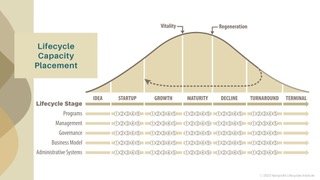
The tool or model that I have found to be the most useful, relatable, poignant and translatable for assessing and then communicating organizational capacity needs is the Nonprofit Lifecycle model developed by Susan Kenny Stevens. The premise of the model is (based on Stevens’ decades of nonprofit leadership and consulting experience) that there are normal, naturally observable stages that all organizations go through over time.
This article was written by Dr. Amy Elliott, Director of the Office of Community Engagement at Marietta College. She has an extensive background in facilitating organizational and personal change and development, as well as experience in both the for-profit and non-profit sectors, including founding and leading organizations in both. She is a nonprofit lifecycles certified consultant.
Mission Met asked Dr. Elliott to share an overview of nonprofit lifecycles because we were recently exposed to it as a team at the Nonprofits LEAD conference. It’s helpful in understanding where organizations are on their growth trajectory and the kinds of capacity building they need at various stages. Mission Met does not currently have a nonprofit lifecycles consultant on staff, but we are supportive of the model and would encourage organizations to familiarize themselves with it while exploring their capacity building needs. We will be referencing this model as it relates to strategic planning in future articles.
Nonprofit Lifecycles
When asked to write a blog about nonprofit lifecycles I was excited to share this ingenious model with a wider audience. Once I started to think about the article, however. I became overwhelmed. I felt like someone asked me to write about a subject so large that it is incredibly difficult to decide what content to include and what content to exclude. I decided to start with the “what” and “why” of the model.
A Common Assessment Challenge (and Solution)
In order to do planning of any kind, we must first assess and come to some agreement on “where we are now" vs. “where we want to be." These assessments, the sharing of results of the assessments and the goals that are set from the conversations take on many forms in our different organizations.
A sound argument could be made that the tools used or types of assessments completed don’t matter. One could argue that the importance lies, instead, in the process of assessing current status and the great conversations that come from it. These are the real benefits to the organization and the planning process. I tend to agree with that theory.
However, so many times in organizational planning we need to share our assessment results with those outside the scope of the work. A challenge of this is that the basis and the vocabulary have to be understood by all involved. That is where a universally understood and simple tool like nonprofit lifecycles becomes incredibly valuable.
The tool or model that I have found to be the most useful, relatable, poignant and translatable for assessing and then communicating organizational capacity needs is the Nonprofit Lifecycle model developed by Susan Kenny Stevens. The premise of the model is (based on Stevens’ decades of nonprofit leadership and consulting experience) that there are normal, naturally observable stages that all organizations go through over time.
This premise should be comforting to the nonprofit staff or board members. Knowing that there is a natural flow, predictable growing pains and next steps takes the exploration of our challenges away from being personal and feeling like we are to blame. It moves us into a realm of systems which makes it much easier to objectively discuss topics pertaining to our organizations. As a natural result, the potential solutions can be discussed impersonally, making the conversations easier to have when blame or fault are off the table
Understanding the Role of Assessments
When nonprofits opt to work with the Nonprofit Lifecycles Institute, they first take an assessment known as the Online Selfie or organizations can take the assessment from the book. The assessment is often completed by many individuals within the organization (e.g. board members, leadership, staff.)
The responses to the assessment are not a determination of your organization’s stage. Instead, the team is encouraged to work through their responses together, a conversation that is often facilitated by a Nonprofit Lifecycles consultant. The result is the conversation and a collective determination of where they are within the lifecycle stages. The book version is particularly helpful because participants can learn about and reference the model throughout taking the assessment and in the follow-up conversations.
Why Nonprofit Lifecycles?
Why is it useful? Why should you, a nonprofit leader, take your valuable time to explore this particular model? Because it will become a basis for talking about where you are that will keep all the stakeholders in your world on the same page.
The key question about the Nonprofit Lifecycles Model may be why it is so widely applicable that the community of nonprofit lifecycles practitioners all over the world are using it for assessment, planning and design in any social impact organization with any mission in any situation?
The reason for the widespread applicability and use is that it is a simple, accurate model with an easy to understand and reproduce visual that leads to a common understanding of and language for the capacity situation and the stage of the organization.
I would argue that once you have a common visual model and some common language to use, you can communicate with your staff, your board, your donors and your community about where you are and why your priorities are what they are at any given moment.
The First Step
I encourage you to check out the Nonprofit Lifecyles Book and the NLI website. Then have a conversation with someone about what you learned about where you are in your organization, and maybe even what it tells you about your next steps. And, if you’d like to work with a certified consultant, take a look at their directory.
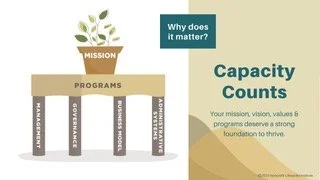
Use the vocabulary of the model to talk about the "lifecycle stage" instead of faulting a person, the board, finances or a particular leader. Talk about "table legs" that may need to be strengthened rather than repeating a conversation about what "can not" be done. See what opens up when it feels less personal to talk about the organization. Did it make planning conversations easier to have?
Editor's Note: In the future, we will be diving into the lifecycle model and how it might help you with your strategic planning, development and execution.

What Size Should Your Nonprofit Board Be?
What size should your nonprofit board be? We’re breaking down what you should consider when setting up your board.
Is there a perfect size for a nonprofit board?
Your organization needs an effective board to run smoothly. This efficiency tends to rely on the capabilities of individual board members, the systems and processes you have in place, the ability of your members to work well together, and the size of the board.
If you look at the nonprofit organizations in your community, you’ll find that board size varies greatly. According to Boardsource, the average number of board members is around 15, although we maintain that small nonprofits don’t need a large board to be successful.
Given that “what is the right size?” is often a pressing question when determining a board, we’re looking at what that means and how you might find that number for your organization:
What Does “Right-Size” Mean for a Board?
We’ll start by saying there’s no universal “right” size of every nonprofit board. If you’re a small, local nonprofit, it might be difficult for you to fill a 15-person board. A large, national organization may find that a larger board creates roadblocks, while a smaller one can’t accomplish everything needed.
That said, “right-size” means that your board is large enough to be impactful and get the work done that needs doing, yet small enough that teamwork is enabled. Your board should work effectively as a team, with solid communication to manage organizational priorities. For some nonprofits, a 5-member board might be the best fit. For others, you may need 15 or more.
It’s interesting to note that board size and structure have changed significantly as the board's role in governance has become pivotal. If you go back twenty-plus years, boards were often massive in comparison. Nonprofits used to attempt to squeeze in all their major donors. Now, there’s more of an emphasis on boards built based on the competencies or talents of the members. Leaner, more skilled boards are better able to make a significant difference.

Pros and Cons of Small vs. Large Boards
When you’re thinking about what the ideal board size might look like for your organization, you must consider some of the common pros and cons of small vs. large boards. We’ve broken some down here:
Smaller Boards
Pros:
It’s easier for board members to get to know one another and develop strong working relationships.
More direct involvement and involvement opportunities exist for board members.
Communication tends to be easier with fewer people to keep in the loop.
It’s often quicker and easier to make decisions and get projects or tasks rolling. Smaller boards may be more agile.
Cons:
Board members may need to take on several tasks. Sometimes this might include things that are outside of their best skills.
Board members may burn out more quickly, especially if their workloads are too heavy.
Fundraising duties may fall to just a few people and can become a heavy burden.
Smaller boards may not be as diverse in terms of backgrounds and experience. They may not represent varied opinions and ideas.
The board may not have access to the expertise it needs.
The board may struggle with exerting influence.
Large Boards
Pros:
More people will share the workload.
You can form subcommittees; board members can work in areas of their expertise.
They can represent more diverse perspectives.
Fundraising tasks are shared.
There is a greater potential for networks and connections.
Cons:
It can be more challenging to communicate and bring everyone together as a team. Entire board conversations may be quite difficult.
Decision-making can be slowed with more people to consider.
Sometimes, not all members will have the opportunity to be engaged in meaningful work.
Board members may become disengaged from the board's governing role and may become infrequent participants.
Sometimes cliques can form, putting some members on the outside; those smaller groups could take over making the major decisions.
One crucial factor to consider at the root of all this is your board's engagement. A board that is not the right size for the organization can quickly see board member engagement drop off, especially if people don’t feel effective in their role. Your aim should always be to maximize the talents and time of your board members rather than having them disengage.
A “right-size” nonprofit board can effectively make decisions and keep members engaged with meaningful work.

How to Find your “Right-Size”
If you look for data on what the “right-size” is for a nonprofit board, you’ll find a range of advice. For example, The Nonprofit Times suggested that seven is an optimal number for boards to be effective decision-makers. They say each additional member after seven decreases decision-making aptitude by 10%.
In practice, we’ve found that smaller boards can be effective, particularly if they work alongside an advisory council. One of our clients has deliberately chosen a five-person board of directors, which works well for them. Having an advisory council to supplement the board and help provide guidance allowed them to reach this smaller number. If you’re considering board size, it may pay to include an advisory council as part of that discussion - it just might create your “right-size.”
You need to answer a couple of critical questions when determining your board size: 1) What do you need the board to achieve? 2) What expertise do you need to achieve it?
These days, board members should be mission-driven, passionate about the cause, and possess the skills to be effective. It shouldn’t be about offering positions to key donors unless the donors in question have the skills needed, particularly around governance.
Part of your consideration should be the overall organization size. National organizations with local chapters might require a larger board at the national level but smaller boards in their regions.
Your bylaws may also play a role in board numbers. For example, some boards operate by giving the chairperson the tie-breaker vote. Others deliberately have an odd number to prevent tie situations.
Consider what size will be conducive to every board member having a meaningful purpose. How will you keep members engaged and moving forward?
Conclusion
There is no universal “right” size for nonprofit boards, but there is a right size for yours. The underlying aim is to have a board that is big enough to get a range of perspectives, experiences, and connections yet small enough to make decisions efficiently and keep board members engaged with meaningful work.
Make board effectiveness a priority by considering what goals you need your board to achieve and the skills needed among members to achieve them.

5 Great Examples of Nonprofit DEI Initiatives
Diversity, equity and inclusion (DEI), are top priorities among the nonprofits with whom we work.
DEI can follow a few different formats for nonprofits, and some have done a great job embracing these initiatives. Here, we’re highlighting nonprofits that provide an excellent example in the DEI space, following the framework of an action plan as provided by the National Council of Nonprofits.
Diversity, equity and inclusion (DEI), are top priorities among the nonprofits with whom we work.
Taking a stand and espousing DEI values isn’t enough; you have to live them in your day-to-day operations. Studies suggest that nonprofits are still behind, particularly regarding diversity. Seventy-nine percent of board chairs and executive directors are non-Latinx white, compared to sixty percent in the general population.
DEI can follow a few different formats for nonprofits, and some have done a great job embracing these initiatives. Here, we’re highlighting nonprofits that provide an excellent example in the DEI space, following the framework of an action plan as provided by the National Council of Nonprofits.
Organizational Values
From the National Council of Nonprofits: “Are organizational values published on the nonprofit’s website or otherwise shared publicly? Does it make sense for your DEI commitments to be inward-facing, outward-facing or a combination of both?”
Publishing your DEI values can be a great form of accountability to stakeholders and the general public. What commitments are you making toward DEI? You can expect that people will look, and many might offer feedback.
It’s not just about accountability; many people will actively look for your organizational values. Donors want to know that the organizations they support have strong values, similar to their own.
In the nonprofit space, we can find multiple examples of organizations that publish their DEI commitments. The United Way has a published equity framework outlining their shared definition of vision and equity, along with six “levers” for success.
The National Geographic Society tackles its commitment to DEI directly on its website. One thing that makes this public commitment stand out is the acknowledgment of troubling aspects of the Society’s past, particularly regarding DEI. Historically, National Geographic often published stories that didn’t dignify or respect the communities they explored. “These parts of our own history are incredibly painful, but we recognize that fully accepting and acknowledging the mistakes of our past allows us to build our diverse, inclusive and equitable future.”

Opportunities to Listen to Community Voices
From the National Council of Nonprofits: “Does your nonprofit create opportunities to listen to the voices directly from community, grassroots, or young leaders in low-income, under-served and/or marginalized populations within its community?”
These are the voices often missing from meaningful conversations, yet those conversations often directly impact their futures.
We Conserve PA is an example of a nonprofit that gets it. This DEIJ (diversity, equity, inclusion, and justice) community for conservationists has over 90 staff, board members and volunteers from 75 different organizations throughout Pennsylvania, Maryland, Washington D.C., New Jersey and Delaware. National organizations also participate.
The organization provides a forum to share experiences, learn about and advance effective practices and identify opportunities to promote diversity, equity, inclusion and justice in conservation work. They specifically seek out and highlight community voices and have formed several “pods” to address specific goals.
Expecting Partners to Uphold the Organization’s Values
From the National Council of Nonprofits: “Does your organization expect its collaborative and community partners to uphold its own values?”
Partner organizations play a pivotal role for nonprofits, which would reflect poorly on the nonprofit to “buddy-up” to anyone with antithetical values. It’s also worth considering if the partner organization espouses common values. Do they actually live them? It’s one thing to have values published on their website, but often another to follow through.
The American Cancer Society is one example of a nonprofit that highlights its partnerships with organizations that promote Diversity, Equity and Inclusion. They highlight this among their values here.
Diverse Board Recruitment and Staff Hiring
From the National Council for Nonprofits: “How can your nonprofit open its board recruitment and staff hiring pipeline to talented candidates from among underrepresented groups?”
You can’t live DEI without deliberate actions to ensure diversity among your board and staff. As we highlighted earlier, this still tends to be a weakness among nonprofits, particularly if you look at senior roles. There can be multiple barriers to DEI, which nonprofits should analyze concerning their own initiatives. Informal mentoring, bullying and insensitivity can prevent otherwise-competent people of diverse backgrounds from advancing.
Mercy Corps is an example of a nonprofit that is transparent about how its hiring process helps them to achieve its DEI goals. "We believe that only by bringing together a diverse range of identities, experiences and perspectives can we tackle complex crises and create a future where everyone can prosper." They also have published their vision for diversity among their global leadership.

Tracking Progress Towards DEI Goals
From the National Council of Nonprofits: “How will your nonprofit assess the progress you are making towards your goals of diversity, inclusion and equity? What will success look like? Feel like?”
If you’re not setting very specific DEI goals and tracking progress, how will you know whether you’re achieving and living your DEI values? Measuring progress is essential to determine if you’re doing the right things or need to make a new strategy.
Tracking and assessing your progress can be another form of transparency and accountability, as shown by NPR. They have an “Ongoing Work” page on their website describing diversity as core work, not just a special project. For further transparency, they also post their strategic plan priority for DEI.
Conclusion
Nonprofits must ask the questions highlighted by the National Council of Nonprofits and check-in to examine any internal biases or barriers to DEI within their organization.
Critically, it’s about walking the talk, taking the proper action steps and being accountable for results. This is the main reason we encourage nonprofits to include DEI in their strategic plan.
DEI components should be aligned to work with an organization's overall strategy. When developing a strategic plan, consider how your nonprofit will promote diversity, equity and inclusion in your work, employment practices, boardroom, communications and more.
The National Council of Nonprofits provides a list of great resources you can use. Check them out here.
Here’s Why Your Nonprofit Team Isn’t Hitting Its Goals
This article was initially posted on Nonprofit Pro.
Your nonprofit likely has many goals it wants to accomplish, ranging in priority, scope, and timeline. For example:
Raise $75K in individual donations.
Create a marketing and communications plan.
Hire a development director by the end of Q4.
Create a bigger impact.
As you can see, some of these goals are very broad and worldly, while others are regarding a specific tactic. However, for you to lay a path to accomplish your goals, your nonprofit should follow a similar structure for writing each of your goals.
Further, measuring your goals will prevent progress from slipping through the cracks. As the saying goes, you manage what you measure. When a nonprofit has urgent matters to see to, they don’t want to take the time to collect and measure data. However, more than any other tactic, being disciplined and measuring progress will significantly improve your strategic planning skills.
How to Write Stronger Goals
At Mission Met we define a goal as a specific and measurable desired achievement. In addition, essential elements of a goal are:
A goal topic for your goal team to understand what the goal is about. For example, “staff engagement.”
A due date, and, ideally, a start date.
A goal champion that is responsible for ensuring the goal is completed.
A list of any key team members that will help the champion complete the goal.
All of these items live within your strategic plan.
Looking back at the list of goals at the beginning of this article, there are two types of goals represented—process goals and results goals. “Raise $75K in individual donations” represents a results goal because there is a numerical result. Therefore, “Create a marketing and communications plan” is a process goal because it leads to the completion of a plan, process, or system. While each goal is useful to your strategic plan, be sure to take advantage of process goals that create long-term impact for your nonprofit.
In their book, Switch, authors Dan and Chip Heath indicate that process goals—or what they call behavioral goals—may be nearly three times more effective than results goals at catalyzing change and obtaining results
In a pioneering study of organizational change, described in the book The Critical Path to Corporate Renewal, researchers divided the change efforts they’d studied into three groups: the most successful (the top third), the average (the middle third), and the least successful (the bottom third). They found that, across the spectrum, almost everyone set goals: 89 percent of the top third and 86 percent of the bottom third. A typical goal might be to improve inventory turns by 50 percent. But the more successful change transformations were more likely to set behavioral goals: 89 percent of the top third versus only 33 percent of the bottom third. For instance, a behavioral goal might be that project teams would meet once a week and each team would include at least one representative of every functional area. Until you can ladder your way down from a change idea to a specific behavior, you’re not ready to lead a switch.
Make sure you document a clear set of behaviors or processes you will build and implement to achieve your results goals.
How to Measure Your Goals
With the rise of software that captures all of our data, nonprofits need an approach for using technology to track their progress. However, I understand that this can be difficult to implement.
When building your team’s goal-measurement muscle, instead of focusing on results, focus instead on the process of measuring results. Commit to measuring your goals on a regular basis. Report on this process with your team, but don’t focus as much on the numbers themselves.
A traffic-light system can be a simple way to measure goals. Green may mean “on track”, yellow for “slow progress” and red for “off track.” Keeping it simple will make sure it happens regularly and not be too onerous.
Over time, as you and your team build your measurement discipline then you can begin raising the expectation for actually hitting your goals.
How often should you measure goal progress? Monthly check-ins will keep the goal in sight. At each check-in, regularly measure how you’re achieving your goals by asking “what worked”, “what didn’t work”, and “what you intend to change” so that you’re more successful in your journey to goal achievement.
Writing and measuring goals doesn’t have to be all that challenging. Discuss this guidance with your team today, and you’ll be on the way to making goals work effectively at your nonprofit.