
Death by Meeting
(This is an updated version of one of our most-read blogs from several years ago. It’s about a timeless topic: running effective meetings.)
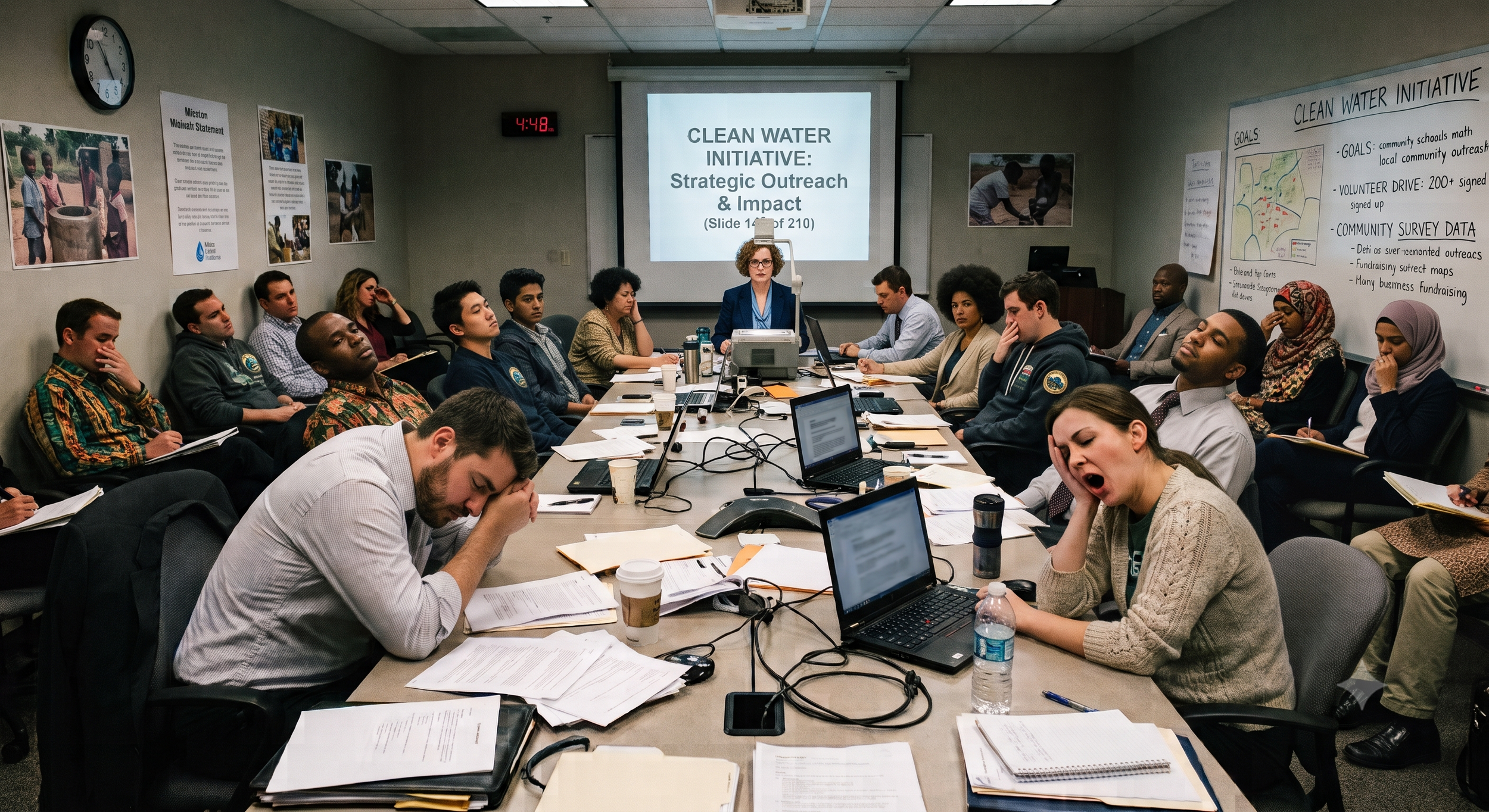
I've borrowed the title for this blog entry from one of my favorite business books, Death by Meeting by Pat Lencioni.
The basic idea of the book is not that you'll die by meetings. Rather, you might die from awful meetings.
As you know, awful meetings happen all the time. They take too long. They wander aimlessly. They don’t start or end on time. You’d pretty much rather be anywhere else.
It doesn't have to be that way. I lead hundreds of successful meetings each year, both in-person and virtually. In fact, I recently facilitated a four-hour Zoom meeting (yes, a four-hour Zoom meeting) that began on time, ended on time, led to a clear set of action-items, and left all thirteen people in attendance raving about what a great use of time it was. Imagine people leaving a four-hour meeting actually happy to have been in attendance!
Although I have many tricks to running effective meetings, there is a foundational tip that stands above all the rest: Communicate your meeting outcomes at the outset.
You see, most people create meeting agendas that say we’re going to talk about this, discuss that, etc. As a result, the meeting just ends up being a bunch of talking.
In contrast, what I try to do for most of my meetings is establish and communicate a set of specific meeting outcomes for what we will accomplish by the end of the meeting.
I know, this may not seem like much. I get it. But I promise you that this simple technique is a game changer for your meeting effectiveness.
To give a sense of what this looks like, below I’ve provided some comparisons between agenda items versus meeting outcomes.
Agenda Item: Social media discussion vs. Meeting Outcome: Document revisions to our LinkedIn strategy
Agenda Item: Discuss organizational values vs. Meeting Outcome: Each meeting participant will have provided a specific example of how we are living an organizational value
Agenda Item: Review our strategic plan vs. Meeting Outcome: Progress on each of the goals in our strategic plan will have been measured and documented
Notice that each of the outcomes are much more specific when compared to the corresponding agenda item. And, with that specificity comes a significantly more focused conversation that saves time and increases relevance. It's amazing to watch my clients' meetings become more powerful and efficient when they simply employ this tip.
Here is a sample meeting agenda that provides some more examples of how outcomes can be worded.
So, when you're preparing for your next meeting, ask yourself this question: "What, specifically, do we want to accomplish by the end of the meeting?" Then, document your responses as outcomes on your agenda, review them with your meeting participants at the beginning of the meeting, and drive the conversation toward those outcomes. Simple and powerful.
Of course, there are lots of other tips to strengthen meetings. But without a set of clearly defined outcomes, all of the other tips lose power.